
‘Flexibility’ is a word that Immesi will use nine times throughout our hour long conversation and it appears to be the biggest selling point of the aparthotel model – all of the usual comfort of a hotel room, but with desks for working, kitchens for cooking and a living space for relaxing. This type of room also lends itself to longer stays and is a catnip for the expanding ‘bleisure’ market, a trend that Immesi is all too aware of. “We need to have a desk space as well as somewhere to dine,” she says, “because that’s a big focus for everybody, that they want to be able to work from the area.” The rise of a remote working culture has allowed the aparthotel trend to boom and might explain why a seasoned hotelier like Immesi has turned her back on traditional operations for this newer, hybrid hospitality model.
Immesi joined the Native brand in May of last year, to run its aparthotel and serviced apartments portfolio (the group also has a build-to-rent arm). She has a stellar CV, which includes a pivotal role on the opening team of the original Hoxton Hotel, launching Ace Hotel in Shoreditch and being General Manager of (since closed) The Curtain Hotel and Members Club in the same neighbourhood.
Has her experience in hotels informed her approach at Native? She says yes: “I knew as a brand Native had good bones and I was like, what can we do with these bones? And how can I make a cohesive brand and get that messaging across to our customers? Anytime you have a platform that you can do some type of activation with your community, with different partners, all of that obviously drives your PR machine. But it also gives you a new audience, and you’re in conversations that you wouldn’t usually be in. So that’s what I’m bringing in.”
Immesi has also focused on creating a brand story, making sure that the properties are engaging with transient guests (those staying for two or three nights), as well as the corporate market, which is traditionally the biggest customer of an aparthotel.
A big part of creating a recognisable brand is the look and feel of the building. Immesi tells me that “the cultural programming angle is huge” for Native, and this bleeds through to the interiors.
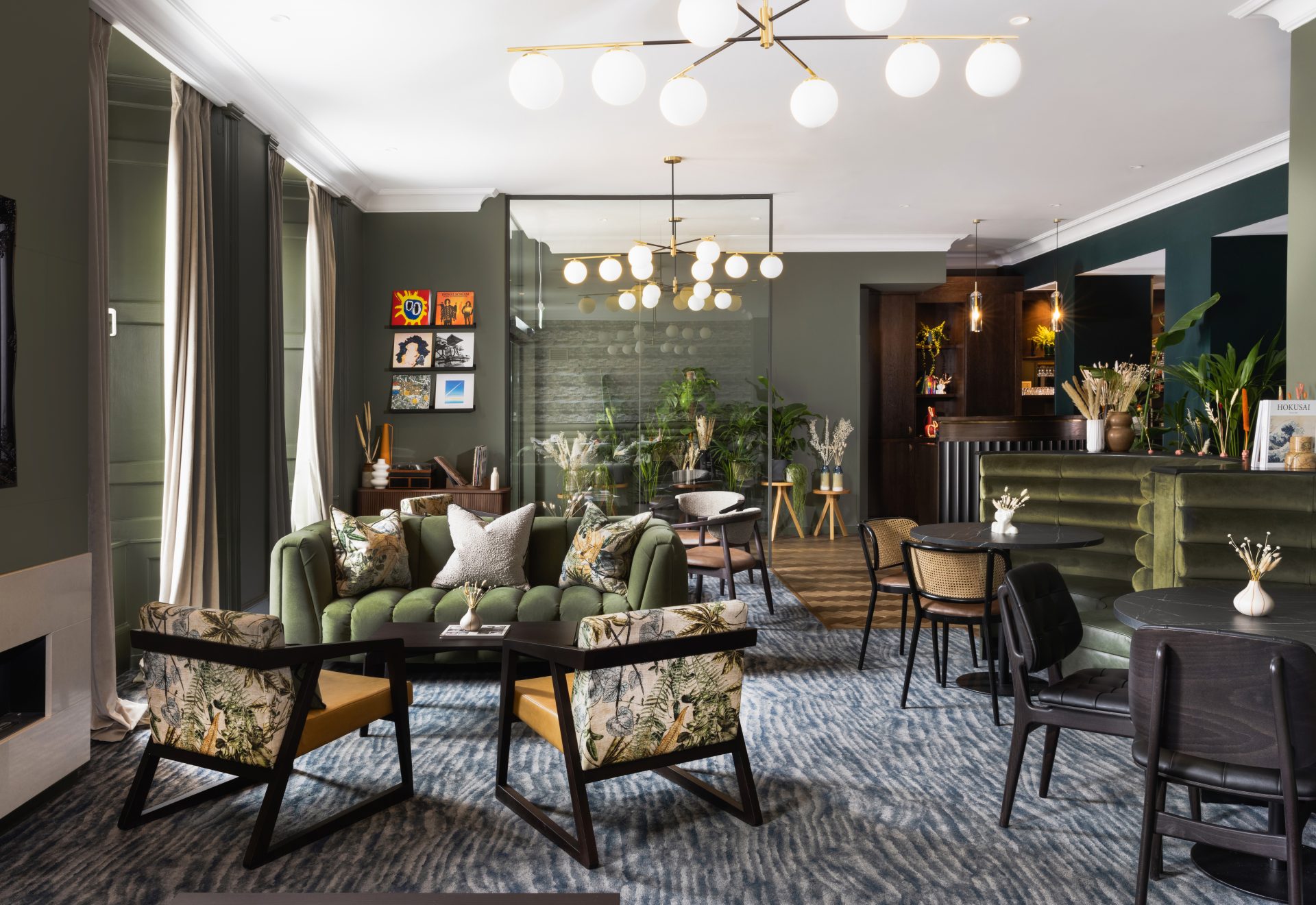
The group’s Edinburgh location, the latest site to open, underwent a £500,000 renovation before opening under its current guise and getting the lobby/bar/restaurant at the centre of the space right was of huge importance to Immesi. She tells me: “I wanted to really focus on how we could make the lobby space inviting, because if you have a nice environment in the heart of the hotel, that drives people to stay and it supports with driving your average daily rate. The more that you have that inviting feeling in the general public areas, it supports with everything throughout the building.”
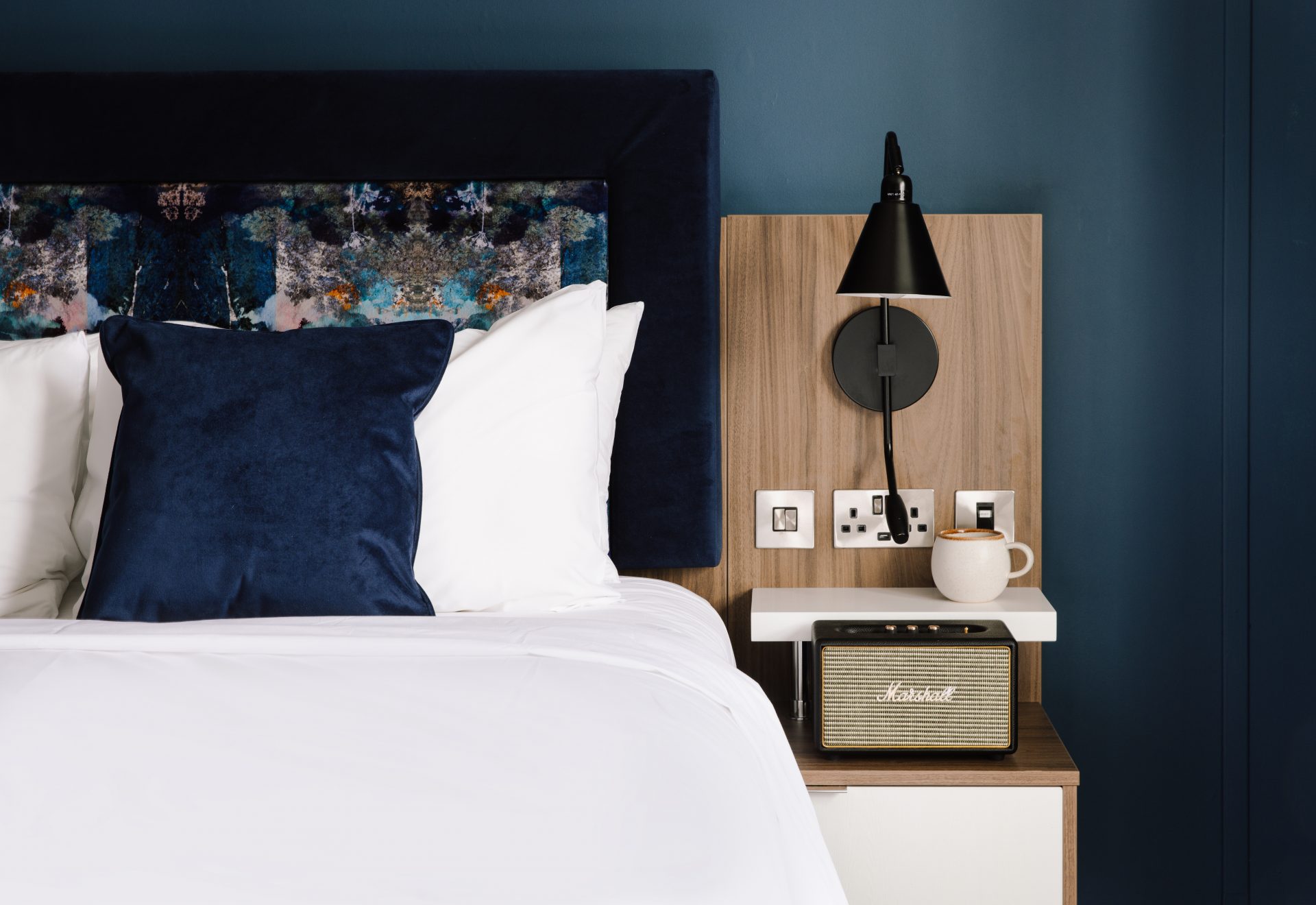
The rooms themselves are design-led and modern, featuring a desk, couch, kitchen area and a bedroom and bathroom. Locality is championed – the colourful wallpaper behind the sofa is the work of a local artist and the milk in the fridge comes from a local farm: “They actually give us the little milk urns” says Imessi. “We then wash them, send them back and then they give us the milk and redeliver. So there’s nothing going to landfill at all.”
This brings us to the topic of sustainability, which Immesi believes is another element of the appeal of aparthotels. I can see what she’s getting at – giving guests the option to cook for themselves arguably reduces waste, while aparthotel guests don’t have their towels and bedsheets changed every day, which also reduces the property’s environmental impact.
Immesi talks passionately about the concept of ‘conscious consumption’ and how it is a primary motivation of modern guests, in particular the millennial market. “We have a profile on every one of our customers per city, because our marketing is all about data and we need to understand what the decision maker is” she says, “and the second thing that they look at is sustainability options. They make sure that they’re making sustainable choices, and they want to understand how companies run sustainably.”
It’s a trend that she welcomes, but also one that she is still wrapping her head around: “I’ve been in the business for over 21 years now, I can’t believe it. But I feel like, wow, that is massive, because it all just used to be about price and location. I want to be a leader in that.”
Native is putting its money where its mouth is, with an aggressive target of achieving net zero carbon as an operation by 2030. “We’re looking at how we actually put these action plans in place to make sure that we can deliver this” says Immesi, “and that’s not just offsetting, it’s actually looking through the whole operation.”
While flexibility and sustainability make aparthotels an attractive proposition, I wonder if there are any downsides to the model, suggesting that perhaps the level of service is not the same as at a traditional hotel. “That’s something people think” counteracts Immesi, “that there isn’t that level of service, but then they come and they try them out and realise there actually is versus other boutique brands. It is very similar in what you get.”
However, she does concede that one big difference is the absence of a daily clean, although she says they are looking into how regular cleaning can be achieved in this model, in a way that doesn’t feel intrusive to the guest but is also profitable. Immesi also notes that aparthotels don’t always offer the same added value as their traditional counterparts, in the way of on-site gyms and spas, although I don’t imagine many people turning up to an aparthotel would expect such facilities. As she puts it: “There is a market that wants to feel that they’re in a luxurious five-star hotel, but they’re never going to be my client.”
The daily clean conundrum has also had a positive impact on the trickiest topic of the day – recruitment. As with practically every other hotel brand I speak to, Immesi says that when it comes to recruitment, Housekeeping is the department they struggle the most with throughout the entire Native portfolio. However, the aparthotel model also offers an advantage – sure, these rooms are bigger and thus they take longer to clean, but there are less to get through. Immesi explains: “We’re very clever in making sure that we don’t give as many rooms to clean, like you would in a hotel. Because by our actual nature, we don’t clean every day. That allows us to feel more sustainable and it is, by the nature of running the business, it means we’re more profitable than most hotels I’ve ever run.” Immesi points out that it also means the Housekeeping team is not under pressure to turn around as many rooms, which allows for some “breathing space.”
As for front-of-house staff, Immesi says having a sense of community and engaging with local people and businesses is part of the Native brand’s DNA. She wants Native to be known as a ‘curious’ brand, with staff able to offer the very best of local recommendations: “As your brand grows, and people understand you as a curious brand, you get a more interesting calibre of person that wants to work with you. It’s important if we want to be culturally relevant and radically inclusive, if we want to have all of the things that we believe in as a brand, we need to make sure that we’re finding people that reflect that.”
This thinking also stretches to the group’s relationship with local businesses. Immesi explains: “There’s nothing like having community engagement because they introduce you to other partners and they have this constant ‘you help me, I can help you’. If you help a small business, they’re so grateful and you’ve really done something for your community, because that small business is thriving, and can employ people.” In turn, Immesi says, this attracts more artisanal businesses to the area and stops a city’s character being lost to chains and corporations. “What we don’t want is just a whitewash of cookie cutter faces” she says. “Nobody wants to go there. I don’t want to go there. And I don’t want to work for a company that does that.”
Many hoteliers are fretting about rising operational costs, but Immesi – while not oblivious to the oncoming challenges – is trying to see the positives. “Now, everyone is very much focused on the fact that they aren’t going to have as much money as they had, and what can they do with that money and get the best quality that they can. I think this is a huge opportunity for us.”
As a group, Native is planning to expand “very, very aggressively”, as Immesi puts it. The group is 70% owned by the Aries hedge fund and is looking to expand in key cities: three new sites will open in the next two years and locations in Cambridge, Cardiff and Oxford are all being looked at. Most of these new sites will follow the aparthotel model, but some will fall under Native’s Apartment Collection – serviced apartments that are typically used by corporates who have relocated for work.
The group’s expansion plans show that hybrid hospitality models such as aparthotels are far from a passing trend. Of course, there is still very much a place for the butlers, spas and concierge teams of more traditional outfits, but aparthotels are here to stay and with experienced, passionate hoteliers such as Immesi leading the charge, these brands have serious appeal. “It is great to have a bit of a catch all really” she concludes, “you can appeal to a lot of different markets and it looks good and feels good when people come.” Or, in other words, aparthotels offer some serious flexibility.

